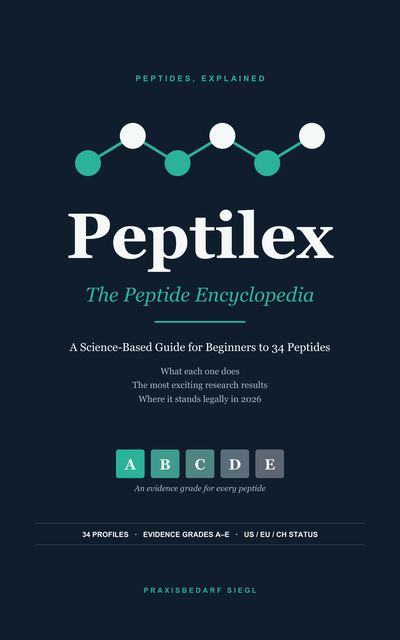
Peptilex – The Peptide Encyclopedia
- 34 peptides – from semaglutide to BPC-157 – in one book
- An evidence grade (A–E) and the key studies for every peptide
- Where each one stands in 2026 – US, EU and Switzerland
Hormones & growth
110 children with growth hormone deficiency; growth rate rose from 4.1 to 8.0 centimeters per year within six months.
Thorner M et al. – Journal of Clinical Endocrinology & Metabolism, 1996Randomized, 19 older adults, 16 weeks; IGF-1 and skin thickness up, lean mass up in men.
Khorram O et al. – Journal of Clinical Endocrinology & Metabolism, 199711 healthy older men, 6 weeks; growth hormone up, two of six strength measures improved.
Vittone J et al. – Metabolism, 1997All key studies, risks and open questions are in the book.
Source: PubMed and ClinicalTrials.gov via the Peptilex study database
Go deeper
What it is, how it acts, the key studies, risks and open questions.
ClinicalTrials.gov · name in study title · ongoing first
No registered trial yet on ClinicalTrials.gov.
PubMed · newest first
Sermorelin: a better approach to management of adult-onset growth hormone insufficiency?
ReviewWalker RF et al. · Clinical Interventions in AgingPMID 18046908